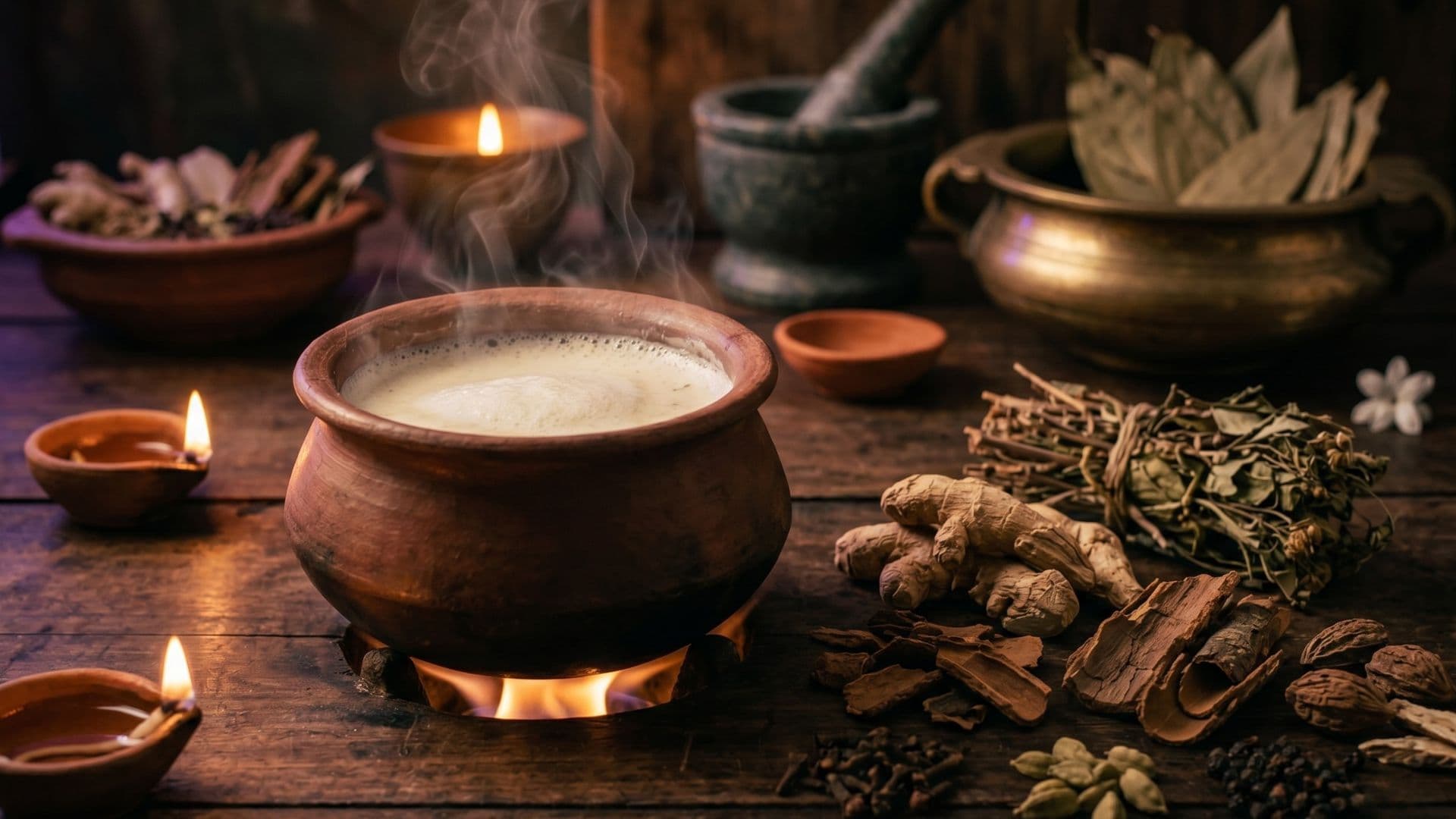
Referenced in the Vatavyadhi chapter of the Ashtanga Hridayam, Bala Thailam holds a revered position as a classical nerve tonic — traditionally used for nourishing the myelin sheath and restoring motor function in conditions where the nervous system itself has been depleted.
A Classical Nerve Tonic and Majja Dhatu Rejuvenator
Within the vast pharmacopoeia of traditional Kerala Ayurveda, Bala Thailam holds a revered position as a classical nerve tonic and structural rejuvenator. Classically referenced in the Vatavyadhi chapter of the Ashtanga Hridayam, this formulation is specifically indicated for the most severe, debilitating disorders of the nervous and musculoskeletal systems.
The primary botanical anchor of this preparation is the root of Bala (Sida cordifolia), a plant whose very name translates to "strength." Bala is uniquely celebrated in Ayurvedic pharmacology for its rare ability to deeply pacify both Vata and Pitta doshas simultaneously, without aggravating Kapha, making it an exceptional agent for regenerating depleted nervous tissue (Majja Dhatu) and restoring motor function.
The Science of Ksheera Paka: Transforming Lipids through Milk
The extraordinary therapeutic potency of Bala Thailam is achieved through a highly sophisticated, traditional pharmaceutical process known as Ksheera Paka. Rather than simply infusing herbs into a warm sesame oil base, Ksheera Paka involves cooking the primary herb, Bala, in a rich medium of cow's milk (Go-Ksheera) or goat's milk (Ajaksheera) along with sesame oil, until every drop of water content has evaporated.
This milk-processing method completely transforms the physical and energetic qualities of the carrier oil. It introduces a cooling, sweet, and deeply nourishing profile (Sheeta Virya and Madhura Vipaka) into the sesame oil, tempering its inherent sharpness and heat without reducing its deep tissue penetration.
From a modern physiological perspective, the lipids in the milk act as a natural, biological emulsion. They encapsulate the water-soluble and lipid-soluble active alkaloids of Bala — such as ephedrine and vasicinone — into micro-liposomal structures. This biological encapsulation allows the active botanical molecules to easily cross transdermal membranes and enter the deeper nerve tissues (Majja Dhatu), directly nourishing the myelin sheath and stimulating neuromuscular conduction.
Multi-Herbal Synergistic Chemistry
While Bala root cooked in milk forms the core of this formulation, Bala Thailam is further enriched with a complex paste (Kalka) of over twenty-five neuroprotective, anti-spasmodic, and anti-inflammatory botanicals. These herbs work in synergy to resolve neurological irritation, calm the brain and spinal cord, and accelerate the repair of damaged nerve fibers.
| Secondary Botanical | Scientific Name | Therapeutic Energetics | Neurological Action |
|---|---|---|---|
| Jatamansi | Nardostachys jatamansi | Cool, grounding, unctuous | Provides profound tranquilizing, neuroprotective, and anti-ischemic effects |
| Vacha | Acorus calamus | Warm, sharp, penetrating | Acts as a memory enhancer, mild sedative, and central nervous system depressant |
| Devadaru | Cedrus deodara | Warm, anti-spasmodic | Delivers neuroleptic and muscle-relaxing actions |
| Guduchi | Tinospora cordifolia | Cool, immunomodulating | Protects nerve cells from oxidative stress and localized inflammation |
| Rasna | Alpinia galanga | Warm, stimulating | Enhances blood circulation to nerve endings and reduces neural pain |
Shata Paka and Sahasra Paka: Traditional Processing Excellence
The pinnacle of Ayurvedic pharmaceutical science is demonstrated in the traditional processing of Shata Paka (100-times processed) and Sahasra Paka (1000-times processed) Bala Thailam. In these advanced methods, the entire cooking process with fresh milk and fresh Bala decoction is repeated consecutively one hundred or one thousand times using the same oil base.
With each repetition, the water and milk components are evaporated, leaving behind an exponentially concentrated lipid matrix. This intensive process significantly increases the molecular density of the active herbal alkaloids. The resulting oil is so highly concentrated that even a few drops, when administered orally or intranasally, exert a profound systemic effect, directly nourishing the brain stem and restoring balance to severely damaged neurological pathways.
Clinical Indications: From Hemiplegia to Fibromyalgia
In traditional practice, Bala Thailam is a classical choice when the nerves and muscles feel weak and depleted. It is traditionally used to support strength and mobility during long recovery periods, always alongside the care of the patient's doctor. By nourishing the Majja Dhatu, it helps restore motor control, reduces muscle wasting, and improves nerve conduction in paralyzed limbs.
It is also exceptionally effective for chronic fibromyalgia, chronic fatigue syndrome, and generalized muscle weakness. During convalescence — the period of recovery following a severe, depleting illness — regular gentle massage with Bala Thailam helps the patient regain physical strength, restores vitality, and revitalizes the entire nervous system.
Depending on the patient's condition, this versatile oil can be administered via Abhyanga (massage), Paana (internal administration), Nasya (nasal drops to target the brain), or Anuvasana (medicated enema).
Is this oil right for you?
Ask Mini Bhal Vaidya on WhatsApp — she will advise you personally.
Ask on WhatsApp